
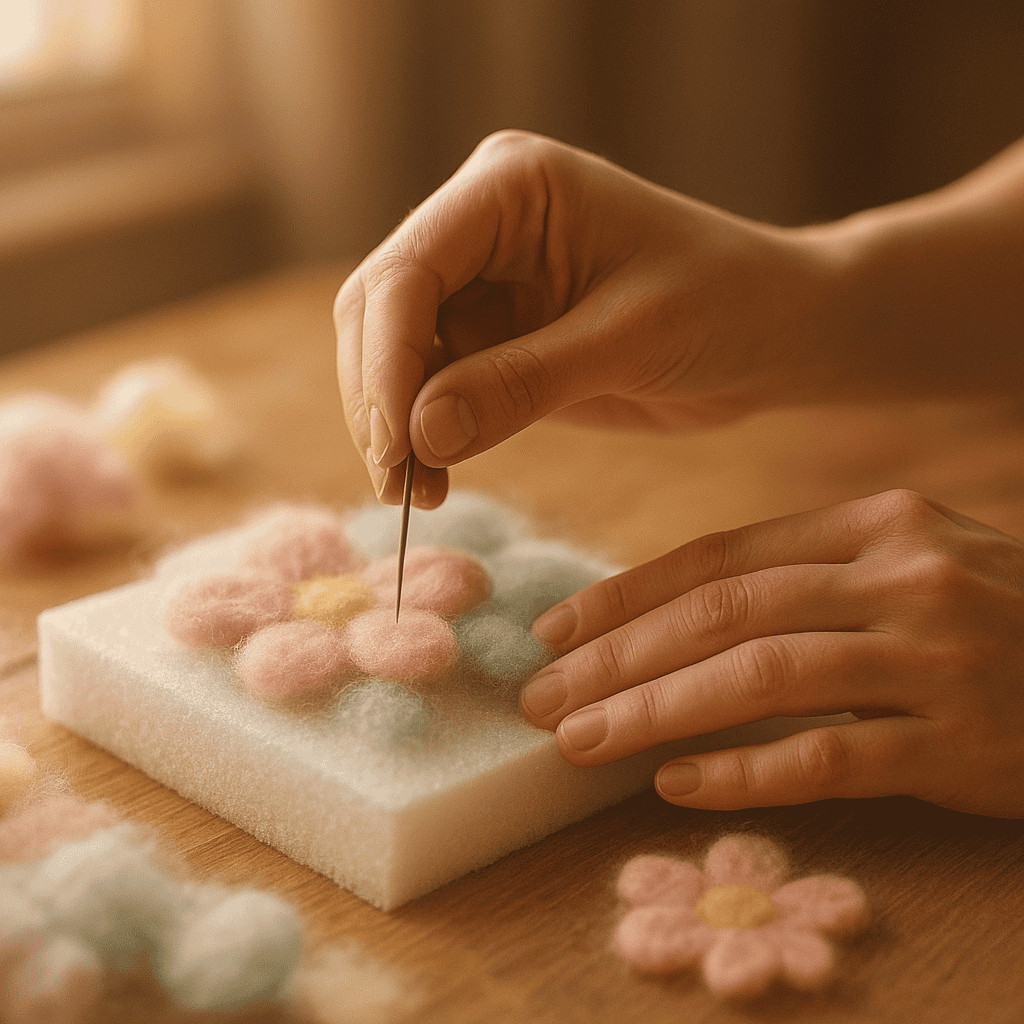
There’s something quietly powerful about sitting down with a piece of wool and a barbed needle and just… poking. It sounds almost comically simple. But ask anyone who has spent an afternoon needle felting, and they’ll likely describe it the same way: calming, grounding, almost meditative. What looks like a humble craft hobby from the outside is turning out to have some genuinely meaningful benefits for mental health — and more people are starting to notice.
Whether you’re someone who’s struggled with anxiety, burnout, or just the relentless noise of modern life, needle felting might be one of the more unexpected tools in the wellness toolkit. Not as a replacement for therapy or medical support, but as a genuine, accessible practice that helps the mind slow down and reset. Let’s dig into why.
What Even Is Needle Felting? A Quick Primer
Before diving into the mental health angle, it helps to understand what needle felting actually involves. Unlike wet felting, which uses water and friction to bind wool fibers together, needle felting uses a specialized barbed needle to repeatedly stab wool roving until the fibers tangle and compress into a solid shape. It’s a dry process, it requires no sewing machine, and the barrier to entry is remarkably low.
You can needle felt almost anywhere — on a foam pad at a kitchen table, in an armchair, or at a craft desk. The materials are inexpensive, and the basic technique takes only minutes to learn. You’re not aiming for perfection; you’re guiding wool into form, one poke at a time.
When did needle felting become a thing? While felting itself is one of the oldest textile techniques in human history — dating back thousands of years across Central Asia and Europe — needle felting as a craft hobby is relatively modern. Industrial needle felting machines were developed in the 19th century for producing felt fabric at scale. The hand-craft version, using single needles to sculpt and embellish, really took off in the 1980s and 1990s, largely thanks to fiber artists in the United States and Japan who began exploring its sculptural possibilities. Today, it’s a thriving global hobby with an enthusiastic online community.
The Repetitive Motion Effect: Why Poking Wool Calms Your Brain
One of the most consistent things people report about needle felting is that the repetitive motion — push, pull, push, pull — has a deeply settling effect on their nervous system. This isn’t just anecdotal. Research into repetitive, rhythmic physical activity has consistently shown that it can help regulate the stress response and reduce anxiety.
Activities like knitting, crocheting, weaving, and yes, needle felting all share this quality. The motion is predictable, controlled, and requires just enough focus to occupy the mind without overwhelming it. Psychologists sometimes call this a flow state — that absorbed, effortless concentration where time seems to move differently and mental chatter fades into the background.
A 2013 survey of over 3,500 knitters published in the British Journal of Occupational Therapy found that 81% reported feeling happier after knitting, and the majority connected their craft to stress relief and a sense of calm. While that study focused on knitting, the mechanical and psychological parallels with needle felting are striking.
The reason repetitive craft motion works so well is partly physiological. The rhythmic movement is thought to activate the parasympathetic nervous system — essentially the body’s “rest and digest” mode, which counteracts the stress-driven “fight or flight” response. It’s the same mechanism behind the calming effects of rocking, humming, or walking at a steady pace.
Mindfulness Without Meditation: Staying Present Through Craft
Mindfulness gets talked about constantly, but for a lot of people, sitting still and focusing on breath just doesn’t click. The mind wanders, the discomfort becomes distracting, and the whole practice feels like one more thing to fail at. Needle felting offers something different: active mindfulness.
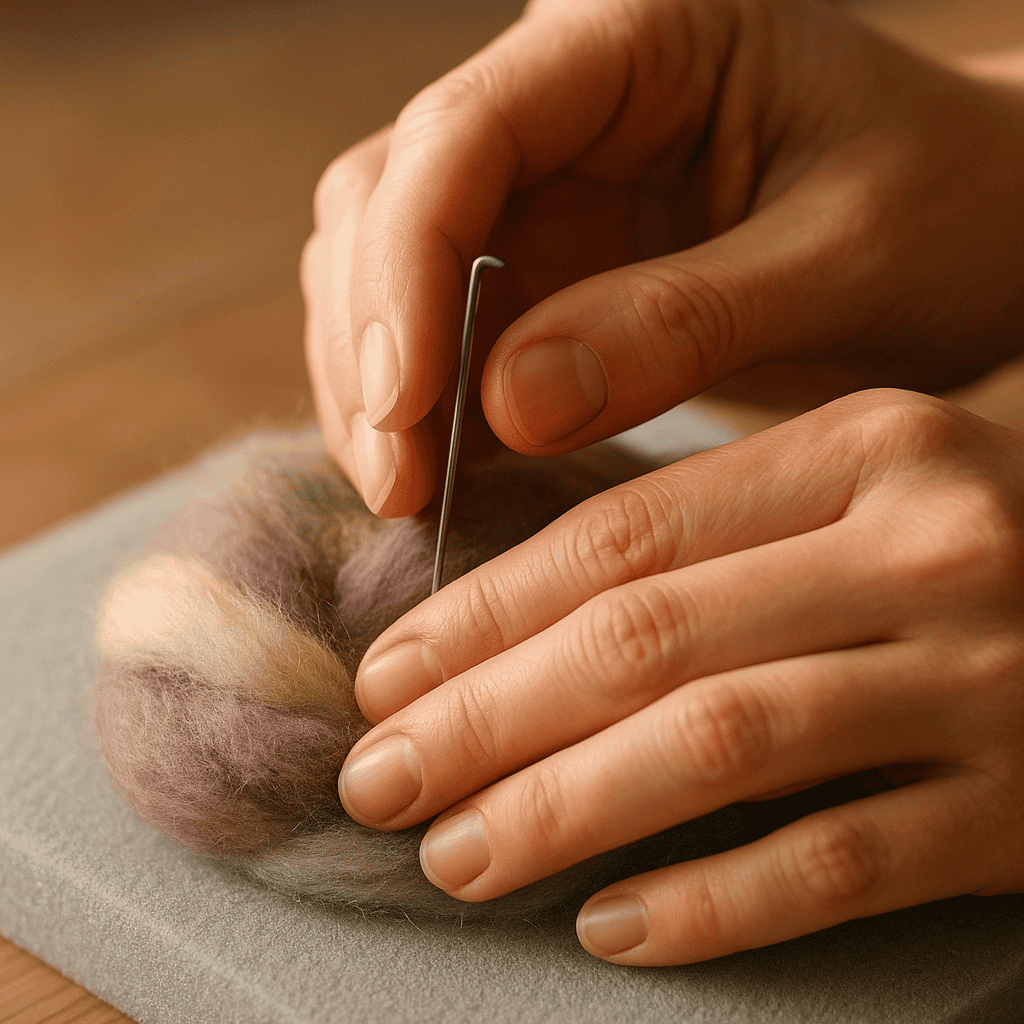
When you’re working with wool and a needle, you’re naturally anchored to the present moment. The texture of the fiber under your fingers, the gentle resistance as the needle enters the wool, the slow emergence of a shape — it all demands gentle, sensory attention. You’re not thinking about the email you forgot to send or the conversation that went wrong last week. You’re here, now, making something.
This kind of craft-based mindfulness has been recognized in occupational therapy for decades. Engaging the hands in purposeful, creative work has been shown to reduce cortisol levels, improve mood, and even help manage symptoms of depression and PTSD. The act of making something tangible — something you can hold — also provides a sense of agency and accomplishment that purely cognitive exercises sometimes can’t replicate.
What Are the Benefits of Needle Felting?
People ask this question a lot, and the honest answer is: quite a few, especially when it comes to mental and emotional wellbeing. Here’s a breakdown of what practitioners and researchers have observed:
- Stress reduction: The combination of repetitive motion, sensory engagement, and creative focus creates a natural decompression effect that many people describe as better than scrolling their phone or watching TV.
- Improved focus and concentration: Needle felting requires just enough mental engagement to quiet distracting thoughts without becoming cognitively exhausting.
- A sense of achievement: Completing a small felted piece — even something simple like a little ball or a flower — provides a genuine hit of satisfaction. This matters more than it might seem for people dealing with low mood or a loss of motivation.
- Emotional regulation: The controlled, repetitive stabbing motion is, frankly, a pretty good outlet for pent-up frustration. Many needle felters joke about this, but there’s something real in it — channeling difficult emotions into a physical, productive activity is a healthy coping strategy.
- Social connection: Needle felting communities — online and in person — are warm, welcoming spaces. Crafting together, sharing work-in-progress photos, and celebrating each other’s projects builds genuine connection, which is one of the most consistently powerful factors in mental health.
- A screen-free creative outlet: In a world of constant digital stimulation, having a hobby that requires no screen time is increasingly rare and valuable.
Is Needle Felting Hard to Learn?
This is one of the first questions beginners ask, and the reassuring answer is: not really. The basic technique — holding the needle correctly and making controlled stabs into the wool — can be picked up in a single session. You don’t need artistic training, prior crafting experience, or expensive equipment to get started.
What needle felting does require is patience. Progress is gradual. You can’t rush the wool into shape; you work with it, allowing the fibers to slowly bind and compress. For some people, this slow pace is a frustration. For many others — and especially for those who are drawn to it for its calming qualities — it’s precisely the point. Learning to tolerate slow progress, to stay with a process without demanding immediate results, is itself a kind of practice.
Common beginner projects include simple shapes like hearts, balls, or flat decorative pieces. As skills develop, many people move on to three-dimensional sculptures — animals, food items, portrait miniatures — which opens up a genuinely impressive range of creative possibilities.
What Can You Make with Needle Felting?
The range of things you can create through needle felting is honestly surprising. It spans from quick beginner projects to incredibly detailed, museum-quality sculptural work. Some popular examples include:
- Felted animals and characters: Tiny woodland creatures, pets, fantastical beings — sculptural needle felting lends itself beautifully to figurative work.
- Decorative embellishments: Felted flowers, patterns, and textures can be added to hats, scarves, bags, and clothing. If you already enjoy repurposing old fabric into new creations, needle felting is a natural complement to that practice.
- Wall art and paintings: 2D needle felting on a felt backing creates rich, textural “paintings” with a depth that regular paint can’t match.
- Holiday and seasonal decorations: Ornaments, garlands, and table decorations are perennial favorites.
- Jewelry: Small pendants, brooches, and earrings made from needle felted wool are increasingly popular.
- Functional items: Felted coasters, pincushions, and small bowls are practical projects that also make thoughtful handmade gifts.
The creative ceiling is remarkably high, which means that even as a hobbyist’s skills grow, there’s always a new challenge to pursue — and with it, fresh mental engagement and satisfaction.
Is Needle Felting Time Consuming?
It can be, depending on what you’re making. A simple shape or small decorative piece might take 20–30 minutes — a perfectly manageable creative session during a lunch break or an evening wind-down. More complex sculptural pieces can take hours, sometimes spread across multiple sessions.
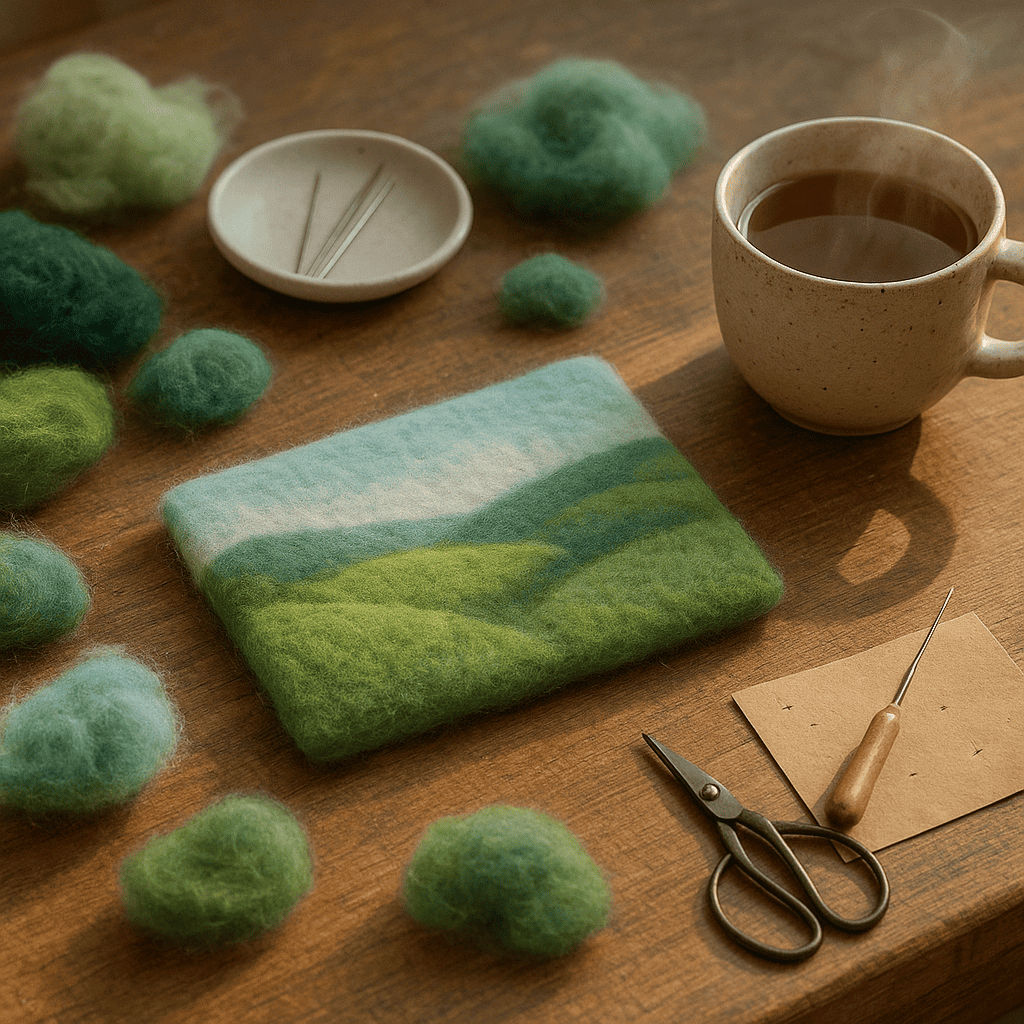
But here’s the thing: the time investment is part of the benefit. In a culture that prizes speed, productivity, and instant gratification, spending an hour slowly coaxing wool into the shape of a hedgehog is a quiet act of resistance. It teaches you to slow down, to value process over product, and to find satisfaction in incremental progress. These are skills that transfer well beyond the craft table.
Many regular needle felters describe their sessions as a form of intentional downtime — a deliberate carving out of space for themselves in a day that otherwise belongs to everyone else. That boundary-setting, that investment in one’s own joy and calm, is itself a meaningful mental health practice.
Getting Started: What You Actually Need
One of the appealing things about needle felting as a wellness practice is how low-stakes the entry point is. A basic starter kit — a few felting needles, a foam pad, and some wool roving — can be found for well under $20. There are no ongoing subscriptions, no apps to download, and no special environment required.
For anyone curious about exploring needle felting for its calming benefits, starting small is the way to go. Pick a simple project, give yourself permission to be a beginner, and focus on how the process feels rather than what the finished object looks like. The mental health benefits aren’t reserved for experienced crafters — they show up from the very first session.
A Final Word on Craft as Self-Care
The conversation around mental health self-care has expanded a lot in recent years, and that’s a good thing. But it can sometimes feel like self-care requires elaborate routines, expensive products, or hours of quiet time that most people simply don’t have. Needle felting challenges that assumption.
It’s a craft that meets you where you are — whether that’s a cluttered kitchen table, a spare 25 minutes, or a beginner’s level of skill. It offers something rare: a way to be genuinely present, gently focused, and quietly productive all at once. And it leaves you with something real to show for it, which turns out to matter quite a lot.
The mental health benefits of needle felting aren’t secret for much longer. As more people discover the particular peace that comes from sitting with wool and a needle, the word is getting out — one small, satisfying poke at a time.
Summary
Needle felting supports mental health through several well-documented mechanisms: repetitive motion that calms the nervous system, active mindfulness that anchors attention to the present, a sense of achievement from completing creative work, and community connection with fellow crafters. It’s accessible to beginners, requires minimal equipment, and offers an impressive range of creative possibilities — from simple decorative pieces to complex sculptural work. For anyone seeking a low-cost, screen-free, genuinely absorbing way to decompress and reconnect with themselves, it’s well worth picking up a needle and some wool.